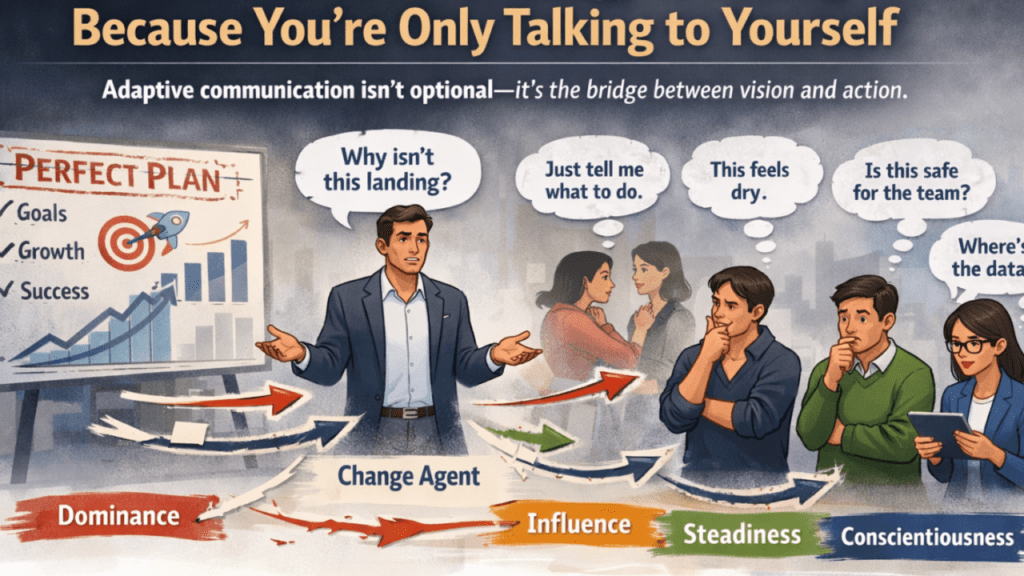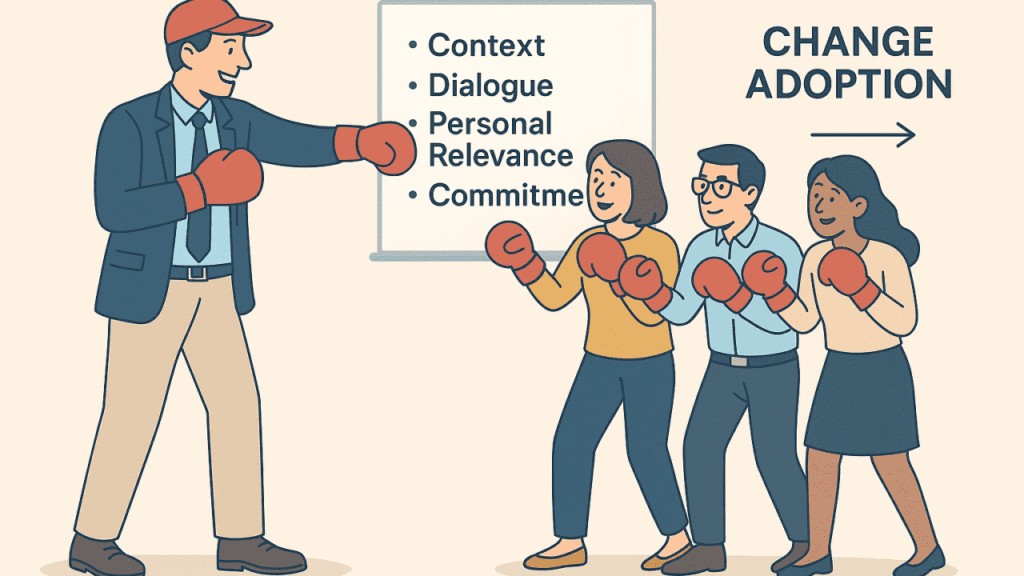
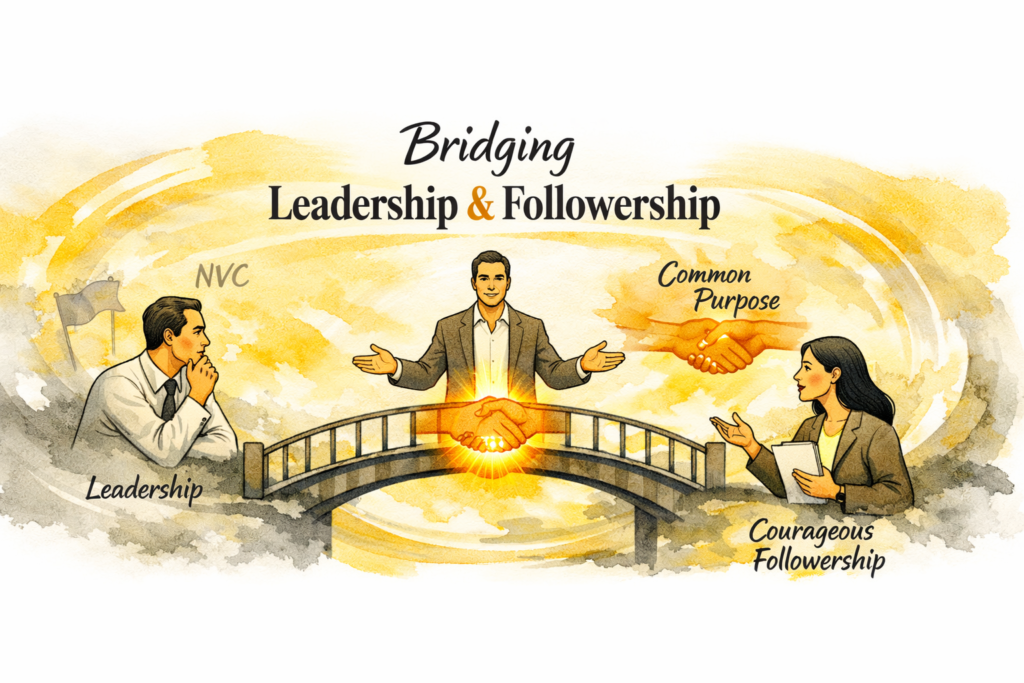
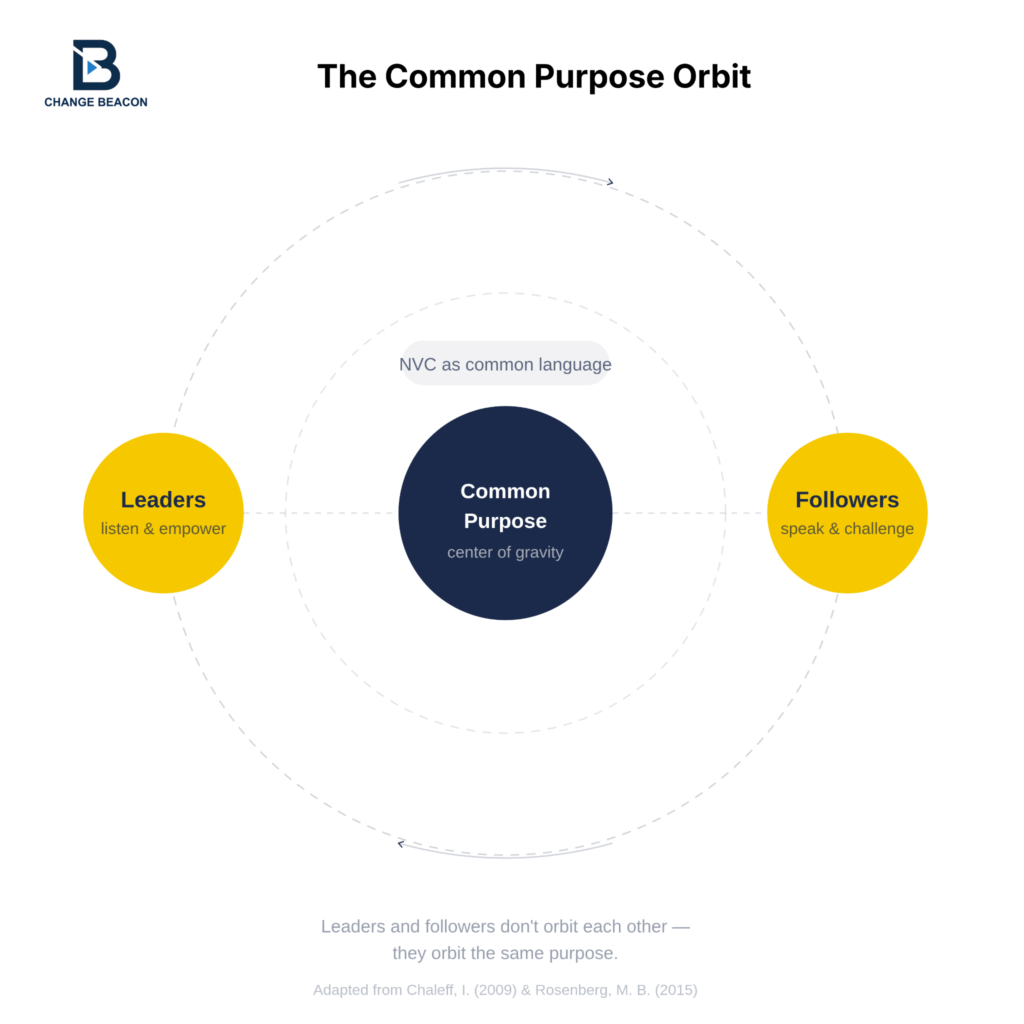
Every organizational transformation has a True North, and it’s not always only the leader, nor the follower. It’s the common purpose. When both sides lose sight of this, individuals retreat into self-interest, silos form, and what was meant to be a shared journey fractures into competing agendas. True transformation only becomes possible when leaders and followers step out of their corners and into something more demanding: a courageous, compassionate partnership.
Followers as Stewards, Not Subordinates
One of the most persistent myths in organizational culture is that followers simply execute what leaders decide. In reality, effective followers are stewards, they share direct accountability for outcomes, a role reflected in the CChA credential itself.
That power only activates when followers are willing to exercise it. The Courage to Serve, the Courage to Assume Responsibility, and especially the Courage to Challenge are not soft ideals, they are the practical behaviors that keep transformation on track. When followers understand that honest upward feedback is an act of service rather than insubordination, the culture shifts: from behind-the-back complaints to open, productive dialogue that actually moves things forward.
NVC as the Language of Courageous Dialogue
Challenging a sponsor’s direction is rarely comfortable. It requires emotional regulation, interpersonal precision, and a framework that keeps the conversation productive rather than defensive. This is where Nonviolent Communication (NVC) earns its place in change management.
NVC works by separating observation from evaluation, stripping away the moralistic judgments that almost always trigger resistance. Instead of saying “You’re completely insensitive to our capacity,” which shuts the conversation down before it begins, a follower practicing NVC might say:
“When I see these accelerated deadlines (observation), I feel anxious (feeling) because I need sufficient time to ensure high-quality execution (need). Would you be willing to help us prioritize the top three initiatives? (request)”
The difference isn’t just tonal, it’s structural. The first statement assigns blame. The second opens a door. And in the middle of organizational change, open doors are everything.
Leaders Who Listen Without Defending
Empowering followers to speak is only half the equation. The other half requires leaders to genuinely receive what’s being said, without defaulting to impatience or defensiveness.
Too many senior leaders mistake an open-door policy for actual openness. But a door that’s technically open and a culture where people truly feel safe walking through it are two very different things. When leaders react defensively to dissent, they don’t just shut down one conversation, they send a signal across the entire organization that honesty carries a cost. The result is predictable: groupthink, self-censorship, and the dangerous illusion that everything is fine when it isn’t.
Real empathy here means more than being polite. It means setting aside preconceptions and listening for the feelings and needs beneath the words, even when those words arrive as silence, resistance, or a flat refusal. A follower’s “no” is rarely pure obstruction. More often, it signals an unmet need that hasn’t yet found language. Leaders who learn to hear it that way don’t just resolve conflict, they build the kind of trust that makes transformation sustainable.
The Partnership That Makes Change Possible
Change management frameworks, roadmaps, and communication plans all matter. But none of it lands without the quality of conversations happening inside the organization every day. When courageous followers and empathetic leaders meet through the shared language of NVC, something fundamental shifts, honesty stops feeling risky, feedback stops feeling like a threat, and the common purpose stops being a slide on a deck and starts being something people can actually feel.
That’s the real work of a change agent: not managing the process, but cultivating the conditions where honest, compassionate dialogue becomes the norm rather than the exception. At Change Beacon, this is precisely what practitioner-grounded change management looks like in practice, not just equipping change agents with tools and frameworks, but with the interpersonal depth to make transformation genuinely stick.
Transformation doesn’t happen to organizations. It happens through the conversations inside them.
Reflection:
What does courageous dialogue look like in your organization and where does it still feel out of reach? Share your thoughts in the comments.
# ChangeBeacon #CommonPurpose #ChangeManagement #OrganizationalTransformation #CourageousFollowership #LeadershipDevelopment #NVC #NonviolentCommunication #ChangeAgent #WorkplaceCulture #EmpathyAtWork #PurposeDriven #OrganizationalChange #FollowershipMatters #CompassionateLeadership #TransformationalLeadership
References:
- Chaleff, I. (2009). The courageous follower: Standing up to & for our leaders (3rd ed.). Berrett-Koehler Publishers.
- Rosenberg, M. B. (2015). Nonviolent communication: A language of life (3rd ed.). PuddleDancer Press