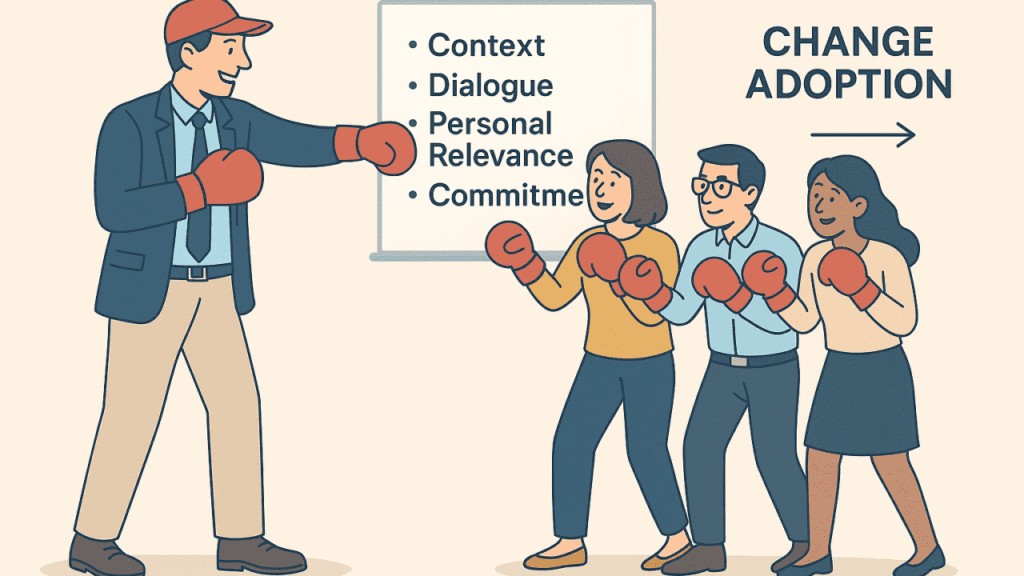
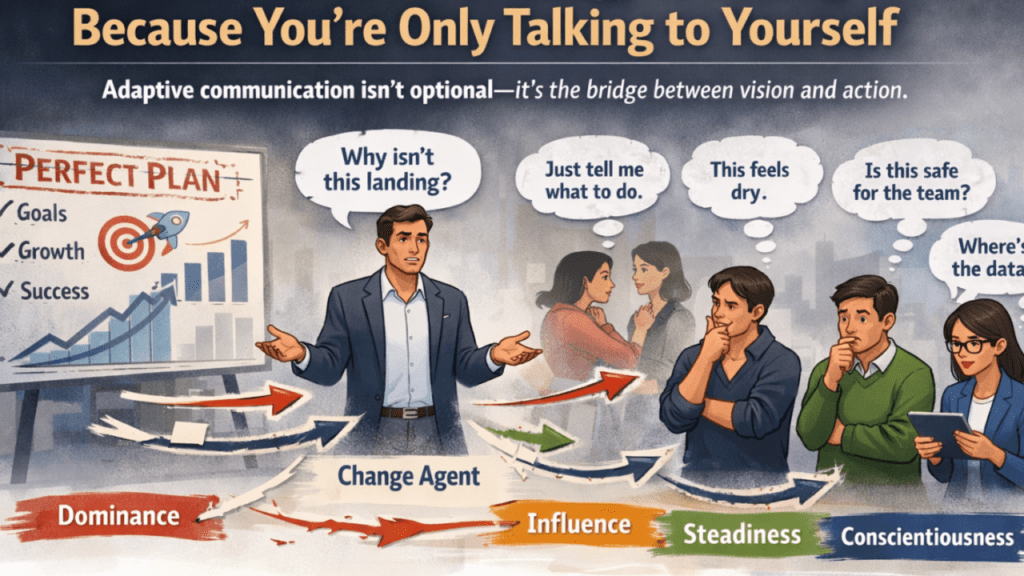
Have you ever faced resistance during a major organizational transformation, even after providing clear directions, maintaining a humble approach, and communicating the strategic vision flawlessly? You lay out the perfect plan, yet despite your best efforts, hidden resistance still arises, and momentum stalls. You might be left wondering, “Why isn’t the team on board when the strategy is so clear?” The truth is, the gap often lies not in the message itself, but in the delivery.
As a Change Agent, your primary role is to bridge the gap between strategic intent and operational reality. However, people process information, evaluate benefits, and perceive risks differently. If communication is delivered in a single, rigid style, it unintentionally excludes large segments of your audience. To ensure strategic initiatives resonate and secure true buy-in, the way we deliver messages must be intentionally tailored to individual personalities, behavioral orientations, and emotional readiness. Adaptive communication recognizes that effectiveness is defined not by what is said, but by how it is received.
This is where Adaptive Communication and the DISC framework become powerful tools for a Change Agent. By diagnosing behavioral patterns, you can adjust your message framing, tone, and pacing to match how your team naturally processes information. Change Agents can adjust how they frame the change message so it resonates with different individuals.
Dominance (D)
Individuals with a Dominance style are results-oriented, decisive, and focused on outcomes.
How to communicate with D:
- Lead with the business outcome and impact of the change.
- Keep explanations short, direct, and solution-focused.
- Highlight what decisions need to be made and what actions are expected.
- Avoid excessive background details.
Example framing: “This change will reduce processing time by 30% and allow the team to deliver results faster. Here are the key decisions we need from you this week.”
Influence (I)
Individuals with an Influence style are enthusiastic, relationship-oriented, and motivated by collaboration and vision.
How to communicate with I:
- Emphasize the vision and positive possibilities created by the change.
- Use an engaging and optimistic tone.
- Encourage discussion and participation.
- Highlight how the change strengthens team collaboration and energy.
Example framing: “This initiative will open new ways for our teams to collaborate and innovate together. Your ideas will be important in shaping how we make this work.”
Steadiness (S)
Individuals with a Steadiness style value stability, consistency, and supportive environments. They may be cautious about sudden change.
How to communicate with S:
- Explain how the transition will happen step-by-step.
- Provide reassurance and clarity about support available.
- Allow time for questions and adjustment.
- Acknowledge the impact on daily routines.
Example framing: “We will implement this change gradually over the next three months. Training and support will be provided at each stage to help the team adjust smoothly.”
When a single communication style is used for everyone, resistance often increases—not because people reject the change, but because the message does not align with how they process information.
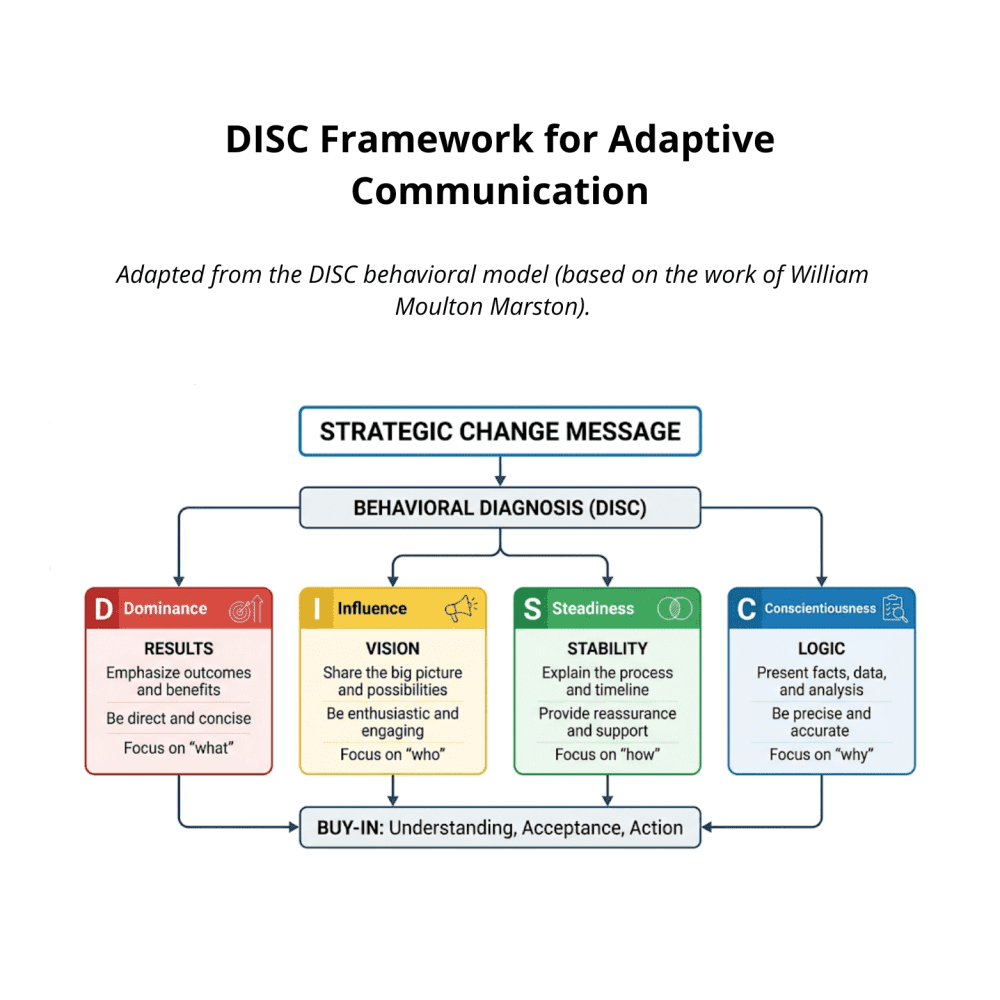
Effective Change Agents therefore:
- Observe how individuals respond to information and decisions.
- Adjust their communication framing accordingly.
- Balance clarity, engagement, reassurance, and logic depending on the audience.
Adaptive communication increases the likelihood that the message will not only be heard, but also understood, accepted, and acted upon.
What happens if we ignore this framework and stick to a one-size-fits-all communication style? The impact on the transformation can be detrimental. Resistance often emerges not because people reject the change itself, but because the way it is communicated completely misses their needs. When a message does not align with how an individual processes information, misunderstanding and defensiveness quickly appear—even if the information is objectively clear. Stakeholders may avoid conversations or retreat into passive compliance, where they intellectually understand the initiative but show no motivation. Failing to adapt your communication creates unnecessary friction and ultimately causes the transformation to stall.
Conversely, when you apply the DISC framework and actively practice adaptive communication, you transform resistance into engagement. By using data and logic for your ‘C’ members, inspiring vision for ‘I’s, straightforward clarity for ‘D’s, and reassurance for ‘S’s, you directly answer the fundamental question everyone asks: “What’s in it for me?”. Tailoring your style restores connection, ensuring that strategic messages are not just announced but truly understood and internalized at the local level. This empathetic, personalized approach builds psychological safety, reduces uncertainty, and turns passive recipients into active advocates for the change.
Effective transformation requires continuous learning and real-time adjustment from change leaders. Frameworks like this are exactly what we cover in the Change Agent Practice Guide — free to download. How do you adapt your communication style when leading complex change? Have you used DISC or similar frameworks to overcome hidden resistance in your teams?
Let’s discuss your experiences and insights in the comments section below!
#StrategyExecution #ChangeBEACON #Behavior #HumanAdoption #ChangeManagement #Communication
Reference: Watling B. 2022. DISC – Handbook of Explanations.