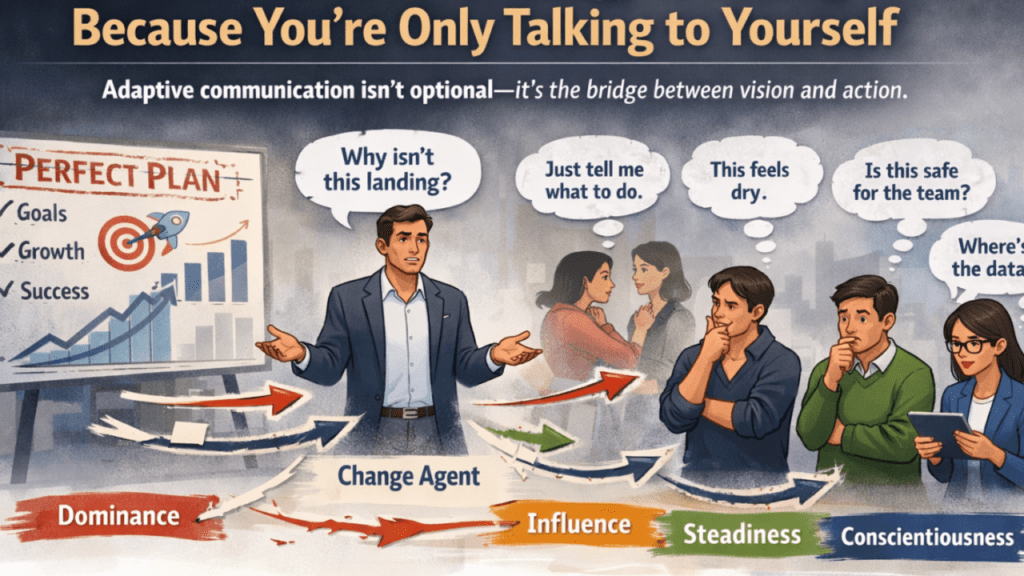
In today’s incredibly noisy corporate environment, sharing information alone is no longer enough to drive complex organizational transformations. Have you ever noticed that despite frequent communications and town hall meetings, your initiatives are still met with low engagement and stubborn resistance?
Employees rarely resist change simply because they disagree with it. More often, resistance emerges because the message fails to connect with their realities. Corporate communication often talks about strategy, metrics, and long-term value creation. Employees ask a much simpler question: “What does this mean for me?”
This is why effective change communication must go beyond simply delivering data. As marketing expert Gary Vaynerchuk famously observed, “Content is king, but context is God”. Within organizational transformation, the value of communication lies not only in what is said, but in how clearly it connects with people’s daily realities. For change agents, this means corporate messaging must be intentionally translated into personally meaningful narratives that resonate with employees’ roles, concerns, and aspirations.
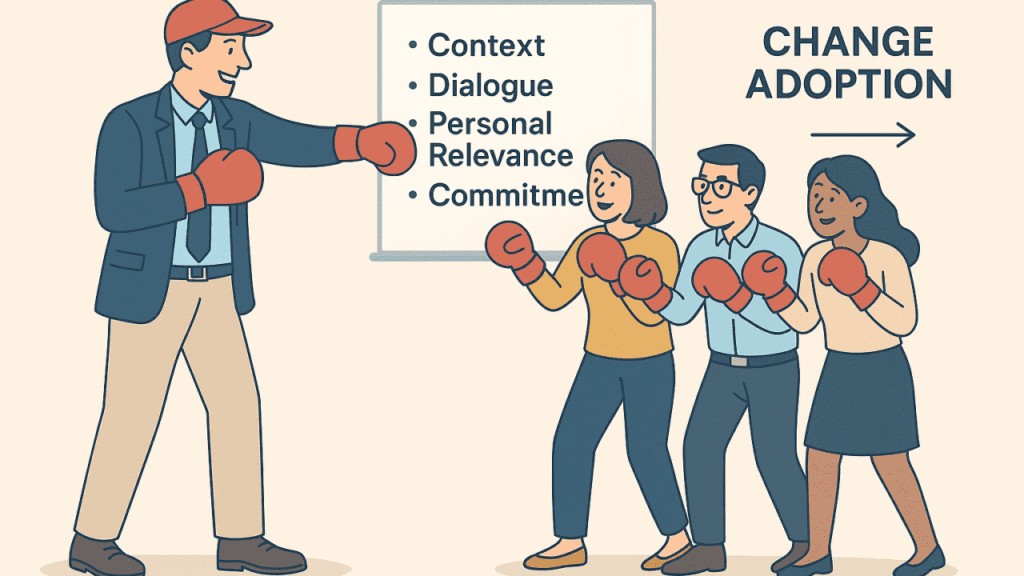
To make this practical, change agents can structure their communication using an approach adapted from the principles in Vaynerchuk’s book, Jab, Jab, Jab, Right Hook. In his framework, “jabs” are the valuable, lightweight interactions that build emotional connection, while “right hooks” are the calls to action that benefit the organization. By establishing the right context first, the eventual request for change feels like a logical, supported progression rather than a forced mandate.
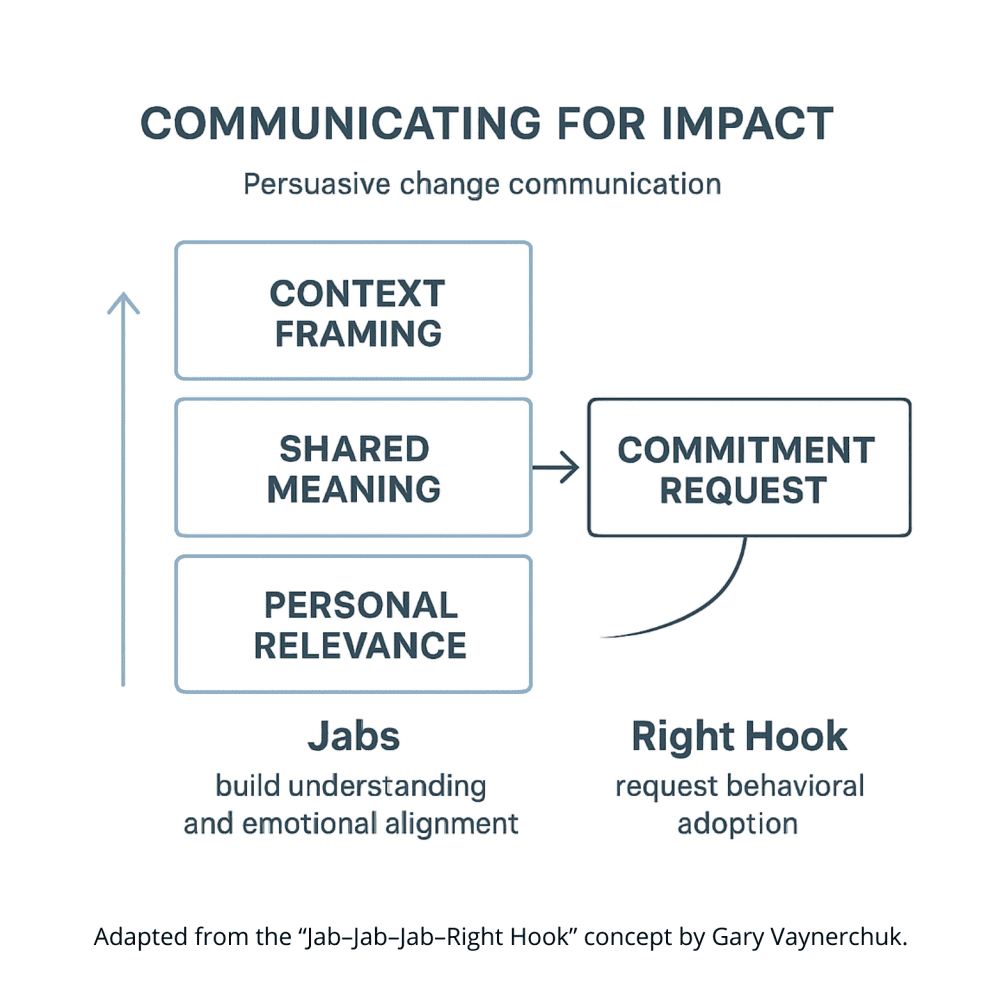
1. Context Framing
(First Jab — Reduce Noise and Clarify the Landscape)
The first step is helping employees understand why change is happening.
In complex organizations, people are constantly exposed to competing priorities, corporate language, and fragmented information. Without a clear explanation of context, employees interpret change through uncertainty and speculation.
Context framing cuts through this noise by explaining:
- the external pressures shaping the organization
- the limitations of the current system
- the broader direction the organization must move toward
The purpose is not persuasion yet, but sense-making.
When employees see the logic behind the change, initial resistance begins to soften because the situation becomes understandable rather than threatening.
2. Shared Meaning
(Second Jab — Replace Broadcast with Dialogue)
Once the context is established, communication must shift from broadcasting information to enabling dialogue.
Employees rarely adopt change simply because they received information. They adopt change when they feel their concerns, questions, and interpretations are acknowledged.
This stage focuses on:
- listening sessions
- open Q&A discussions
- clarifying misunderstandings
- surfacing real operational concerns
Through this process, abstract change messages begin to transform into shared meaning. Employees start to see that the transformation is not something being imposed on them, but something they are actively interpreting and shaping together.
3. Personal Relevance
(Third Jab — Answer the Question Everyone Is Asking)
At the heart of every transformation lies a deeply personal question from employees: “What’s in it for me?”
This is not selfishness; it is a natural cognitive filter. People evaluate change based on how it affects:
- their daily tasks
- their professional identity
- their competence
- their future opportunities
Communicating for Impact requires translating organizational goals into role-specific implications.
Effective messages at this stage highlight:
- what will become easier
- what problems the change solves
- what new opportunities emerge
- what uncertainties still exist
Importantly, credible communication acknowledges both benefits and risks. When leaders openly recognize potential difficulties, they strengthen trust and reduce the perception of manipulation.
4. Commitment Request
(Right Hook — Ask for Behavioral Adoption)
Only after these three stages have built clarity, dialogue, and relevance should the change agent deliver the “right hook”: a clear request for action.
This is the moment where communication shifts from explanation to commitment.
Examples include:
- adopting a new workflow
- piloting a new system
- experimenting with a new behavior
- implementing a revised process
Because the previous stages have already built alignment, the request no longer feels abrupt or forced. Instead, it appears as a logical next step in a shared journey. Without these preparatory “jabs,” even the most logical request can fail. With them, commitment becomes far more achievable.
What tragic thing will happen if the team doesn’t win this battle against fear and corporate noise? The transformation will stall, and the employees will suffer the harsh consequences of inaction. If the change is ignored or delayed, the organization loses its competitive edge, but on a personal level, the individuals get left behind.
But what wonderful thing will happen if they do win? When the communication is clear, consistent, and purposeful, it becomes a powerful driver of alignment and momentum. By providing stakeholders with impact-based communication, the change agent empowers them to safely evaluate and embrace the change. They discover new opportunities, their daily tasks become more streamlined, and they take true ownership of the vision. Ultimately, they don’t just survive the transformation; they emerge as champions, driving sustained change and securing a thriving, successful future for themselves and the company.
As a result, they do not merely comply with transformation initiatives, they begin to actively champion them, accelerating adoption and strengthening the organization’s ability to evolve.
In your experience, what communication “jabs” have been most effective in helping teams move from understanding change to truly embracing it? Let’s discuss on comment section below!
#ChangeBEACON #Leadership #StrategyExecution #Management #RightHook #Communication #Impact #Change #Transformation
Reference: Vaynerchuk, G. (2013). Jab, Jab, Jab, Right Hook: How to Tell Your Story in a Noisy Social World. HarperBusiness.