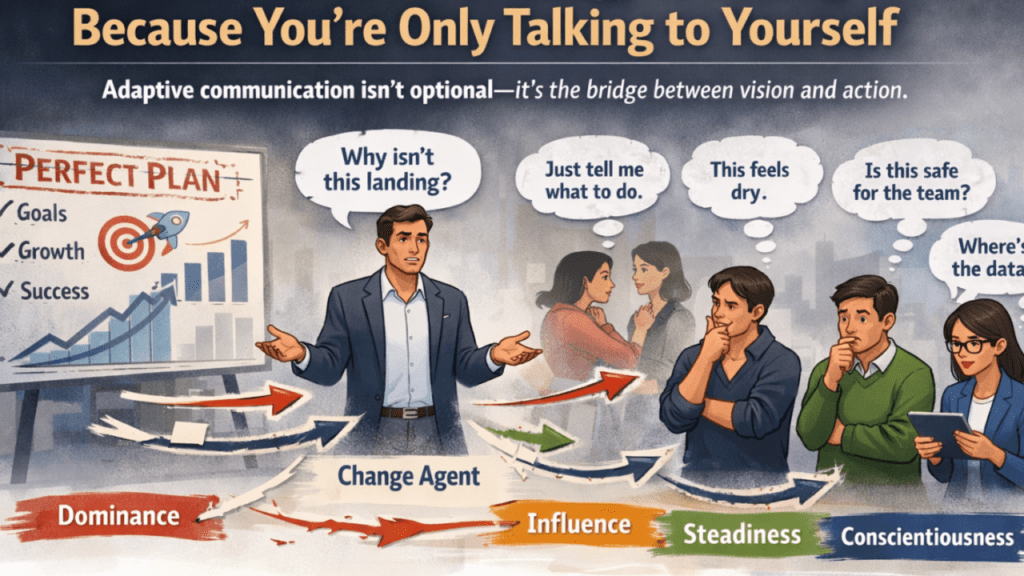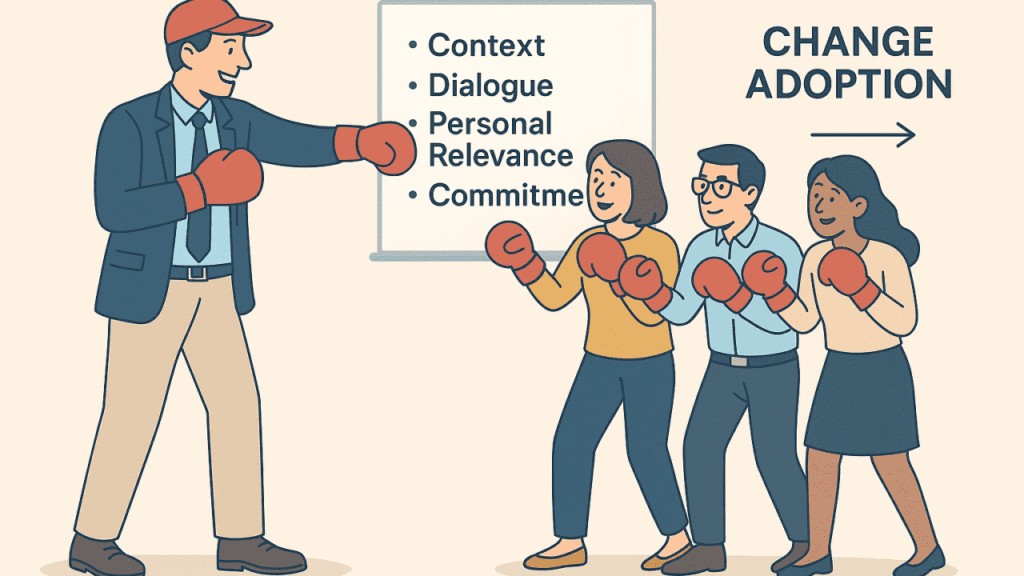
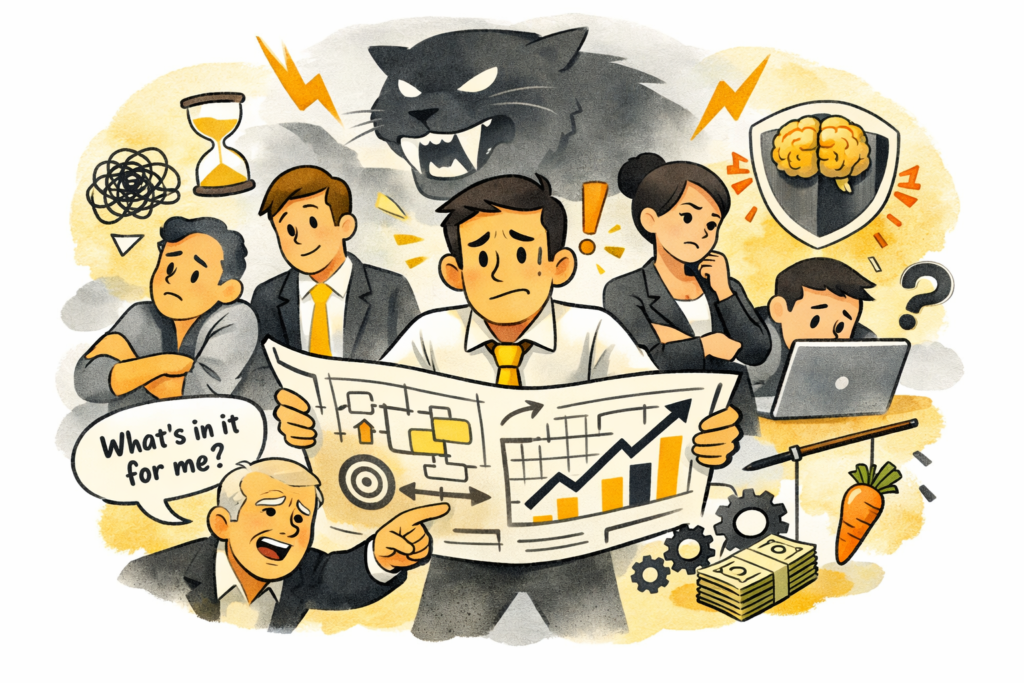
Let’s set the scene: You are the designated Change Agent. The C-suite has just cooked up a grand modernization vision, handed you a massive blueprint, and basically said, “Make it happen.” You walk into the trenches expecting enthusiasm, but instead, you are met with blank stares, endless foot-dragging, and defensive excuses. Sound familiar?
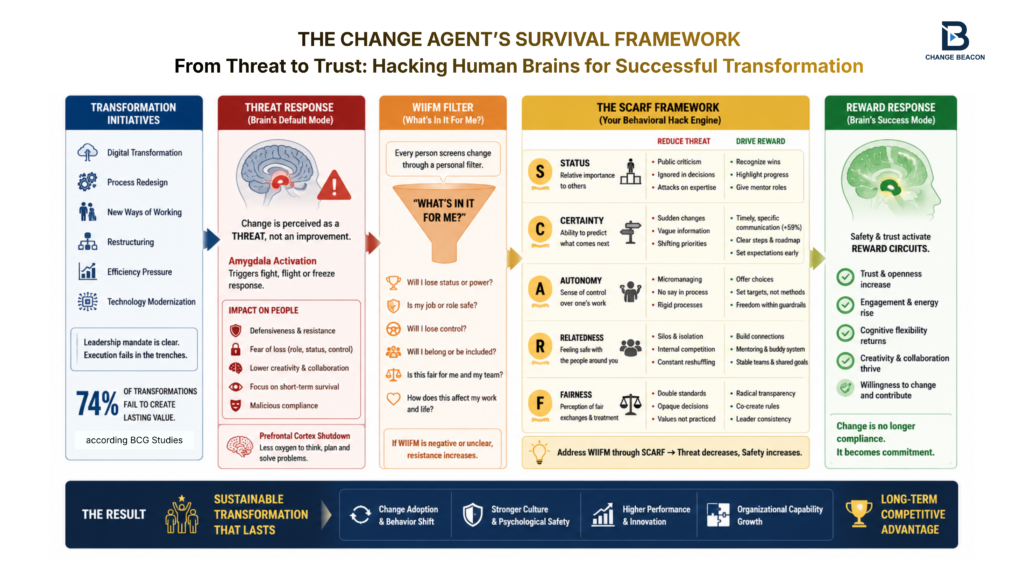
Don’t take it personally. The shocking reality is that 74% of corporate transformations fail to create lasting value. But you aren’t failing because the technology is flawed or the timeline is too tight. You are failing because you are going to war against millions of years of human evolution. To the human brain, a massive, uninvited organizational change triggers the exact same neurological “threat” response as coming face-to-face with a hungry predator.
The Core Problem: You’re Ignoring the Ultimate Filter. The biggest mistake Change Agents make is speaking the language of “corporate benefits” while completely ignoring human biology. When employees face drastic shifts in their daily routines, their amygdala flashes an automatic “avoid response”. This literally starves their prefrontal cortex of oxygen, crippling their ability to think creatively, embrace new processes, or collaborate.
Underneath their polite smiles, every single person you are trying to persuade is aggressively screening your initiative through one incredibly cynical, selfish filter: “What’s in it for me?” (WIIFM). People are motivated by highly personal desires such as saving time, protecting their ego, reducing their risk, or just looking good in front of their peers. If you mandate change using buzzwords like “synergy” and “structural cost reduction” without addressing their WIIFM, you are dead in the water.
The Game Plan: Master Persuasion through the SCARF Model To break through this wall of resistance, you need to stop acting like a project manager and start acting like a behavioral hacker. Social neuroscience reveals that we can minimize that biological threat response and trigger a powerful “reward” response using the SCARF Model: Status, Certainty, Autonomy, Relatedness, and Fairness.
Here is how you execute this plan and get your people of any transformation on your side:
- Manufacture Certainty: The brain craves patterns and panics in chaos. Stop throwing the 5-year master plan at them. Break the transformation down into transparent, bite-sized steps. Data proves that giving timely, highly specific communication boosts desired transformation behaviors by an incredible 59%.
- Protect Their Autonomy & Status: A senior team hate feeling like cogs in a machine. A reduction in autonomy feels like a literal attack. Stop dictating how they must work; instead, present clear, challenging targets, which actually lead to higher performance of the time, and give them the freedom to figure out the path. Let them own the wins.
- Build Relatedness: Break down the toxic silos. Connect the IT guys with the underwriting team so they see each other as “friends” rather than “foes”.
The Stakes Are High The call to action is immediate. The next time you walk into a meeting to pitch this transformation, stop talking about what the company needs. Put yourself in their shoes and tie the metrics directly to their personal incentives and survival instincts.
If you ignore the neuroscience of persuasion and keep pushing top-down mandates, you are guaranteeing failure. You will get “malicious compliance”, where managers adopt fancy new titles but completely ignore the new ways of working. Worse, your top performers will walk out the door because they feel completely disconnected from the chaos.
However, if leadership ego can be set aside and the approach shifts to measurable empathy, the results will be truly revolutionary. Utilizing the reward circuit from SCARF to mitigate mass panic will generate extraordinary collaboration. Transformation will no longer be an exhausting process that burns through the company’s funds; instead, it will succeed in forming a deeply rooted new culture. Ultimately, this is the only path forward to ensure that business initiatives transform into an unshakable, long-term competitive advantage in the market.
Reflection for You:
- Does the current change initiative in your company truly answer the fundamental question every employee asks, namely “What’s In It For Me?”?
- Which domain strategy from the SCARF framework would you like to apply immediately to build safety and trust within your team?
#ChangeBEACON #ChangeAgent #BusinessTransformation #SCARFFramework #ChangeManagement #Neuroleadership #WorkCulture #Leadership
References:
- Eikenberry, K. (n.d.). Bonus Byte: Helping People Answer the “What’s in it For Me?” Question. The Kevin Eikenberry Group. (Sumber: Chap6-WIIFM.pdf)
Rock, D. (2008). SCARF: A brain-based model for collaborating with and influencing others. NeuroLeadership Journal, Issue One. (Sumber: SCARF-NeuroleadershipArticle.pdf)