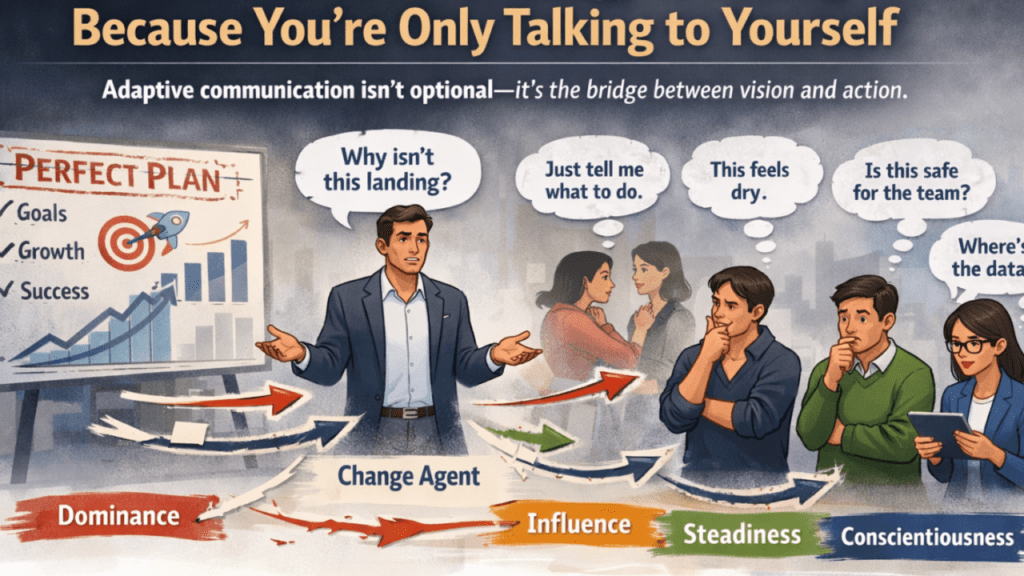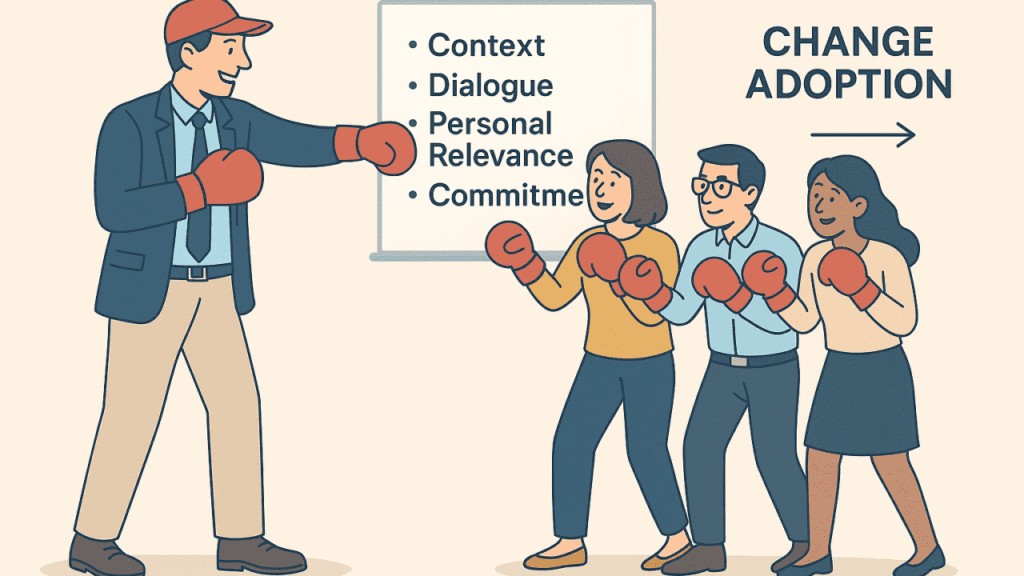

In transformation narratives, we often glorify strategy, governance, and execution discipline. Yet from the vantage point of a change leader, or more precisely, a change agent operating without guaranteed authority, the uncomfortable truth is this: most transformation efforts do not stall because the strategy is flawed, but because influence is weak.
Change leaders rarely have the luxury of relying on formal power. You are tasked to mobilize, align, and transform—often across functions, hierarchies, and competing agendas—without the structural backing that traditional leaders enjoy. And that exposes a critical tension: if your only lever is positional authority borrowed from sponsors, your change will move, but only under pressure, never with conviction.
This is where the classical framework of French and Raven becomes not just relevant, but essential. Their distinction between positional power and personal power is no longer theoretical, it is operational reality for anyone leading change today.
The Illusion of Control in Change Management
Many transformation programs still lean heavily on positional power proxies: mandates, governance forums, escalation paths, and performance-linked incentives. These mechanisms create movement, yes—but often artificial, compliance-driven movement.
- Legitimate power, borrowed from executive sponsors, gives you the right to ask—but not the guarantee of belief.
- Reward power, embedded in KPIs or incentives, may drive short-term adoption but rarely sustains behavioral change.
- Coercive power, through deadlines or escalations, creates urgency—but also silent resistance.
Informational power, controlling narratives or data, can shape perception—but not necessarily trust.
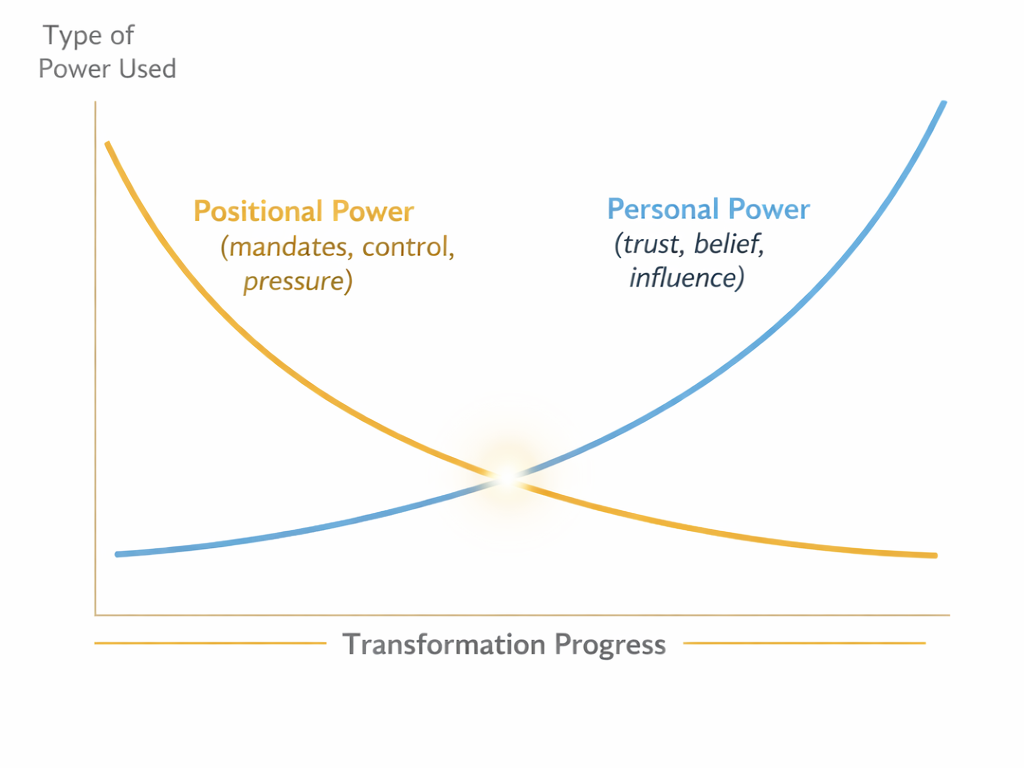
From a change agent’s lens, these are fragile currencies. They work when the spotlight is on, and collapse the moment attention shifts. And in large-scale transformations, attention always shifts.
So the real question is not: How do we enforce change?
But rather: How do we make change self-propelling?
The Only Power That Scales: Personal Influence
Enduring transformation is not enforced, it is adopted. And adoption is fundamentally emotional before it is rational.
This is where personal power becomes the defining advantage of effective change leaders:
- Expert power: When you demonstrate deep understanding—not just of frameworks, but of business realities—you earn credibility. People don’t resist competence; they rely on it.
- Referent power: When stakeholders respect you, relate to you, and trust your intent, they don’t just comply, they advocate.
From inside a transformation effort, this distinction is stark. Teams may attend your workshops because they have to. But they will only internalize your message when they believe in you.
And belief cannot be mandated.
The Provocative Reality: You Might Be the Bottleneck
Here’s the uncomfortable part most change leaders avoid confronting: if your transformation requires constant pushing, chasing, and escalating—you are not leading change. You are managing resistance.
And often, that resistance is not to the change itself, but to how the change is being led.
When stakeholders say, “We’re aligned,” but delay execution, what they are really signaling is: We understand, but we are not convinced.
When teams comply in meetings but revert afterward, they are saying: We heard you, but we don’t trust the direction enough to own it.
In other words, the absence of personal power forces overreliance on positional mechanisms, which in turn amplifies resistance. A vicious cycle, quietly undermining even the most well-designed transformation.
Reframing the Role of the Change Leader
To break this cycle, change leaders must redefine their role, not as enforcers of strategy, but as architects of belief.
This requires a deliberate shift:
- From broadcasting messages → to building meaning
- From enforcing milestones → to earning commitment
- From managing stakeholders → to influencing mindsets
It also demands something less comfortable: investing in who you are as much as what you deliver.
Because in the end, transformation does not scale through frameworks. It scales through people, and people follow those they trust, not those who instruct.
A More Honest Question
So perhaps the question for every change leader is no longer: “Is my transformation on track?”
But rather: “If I removed all formal authority today, would this change still move forward?”
If the answer is no, then the work is not just organizational, it is deeply personal.
Because sustainable change is never driven by power alone. It is carried by influence.
#ChangeBEACON #ChangeManagement #Transformation #Strategy #TransformationalOrganization #Management #Leadership #EmotionalIntelligence
References:
- French, J. R. P., Jr., & Raven, B. (1959). The Bases of Social Power. Dalam Studies in Social Power (Bab 9, hlm. 150–167).
- Mind Tools. French and Raven’s Five Forms of Power: Understanding Where Power Comes From in the Workplace.