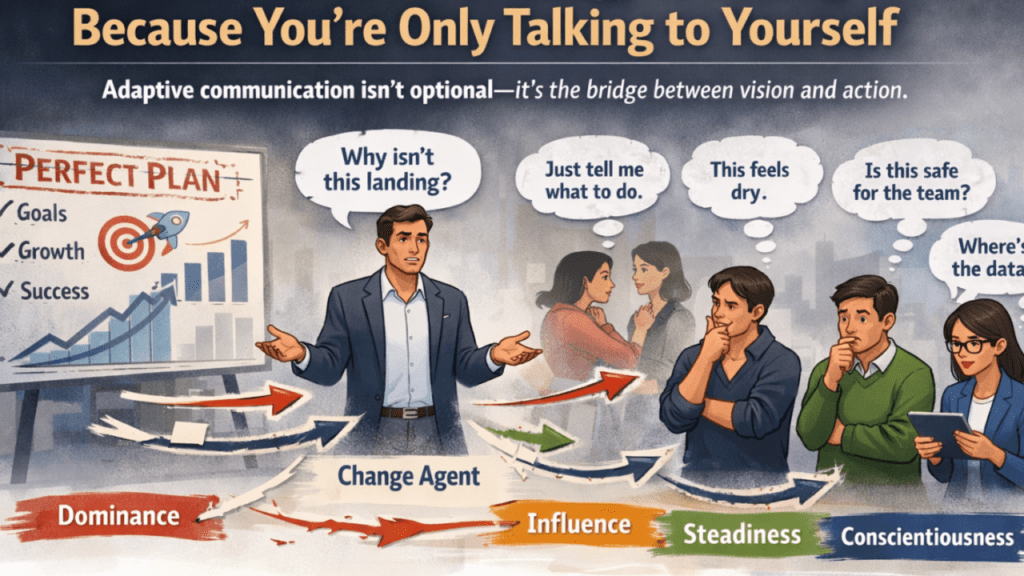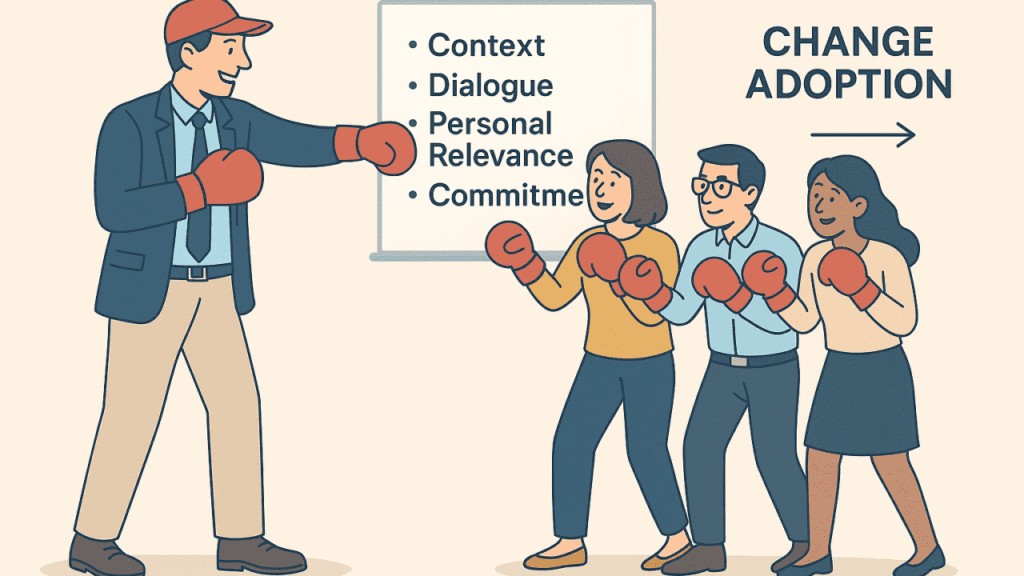
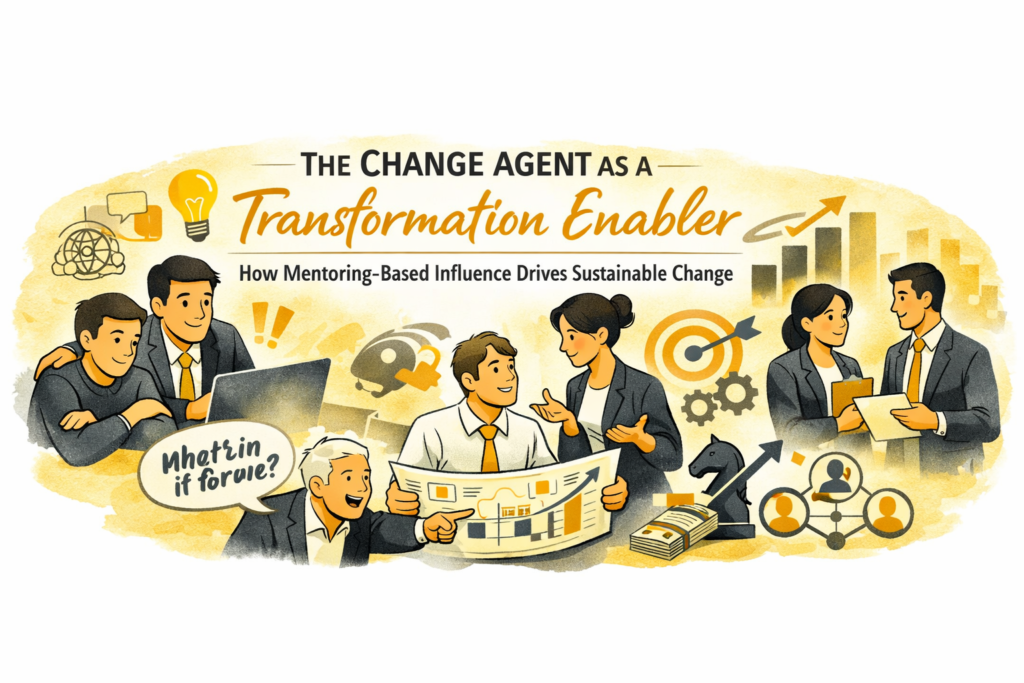
In transformation initiatives, success is no longer defined by strategy, structure, or executive sponsorship alone. While these elements are essential, real transformation happens at the frontline, where employees must change how they think, work, and collaborate.
This is where the Change Agent becomes critical.
In this context, a Change Agent refers to a formally or informally assigned individual within the business who works directly with impacted teams to enable adoption of new ways of working. Unlike change managers who focus on governance, frameworks, and program oversight, Change Agents operate at the point of impact. They work directly with impacted and assigned groups, translating transformation intent into everyday behaviors. Their role is not to manage change, but to enable it to take root.
Change Agents act as the bridge between transformation design and operational reality. They:
- Translate strategic objectives into practical, role-specific behaviors
- Surface resistance, confusion, and capability gaps early
- Reinforce new expectations through daily interactions
Rather than driving compliance, Change Agents create ownership. Their influence multiplies across teams because they embed change into how work is actually performed. Mentoring is one of the most underutilized levers in change execution. For Change Agents, it is not a soft activity, it is a high-impact activity that accelerates adoption.
Through mentoring-based engagement, Change Agents:
- Support individuals as they move from current to future ways of working
- Clarify new roles, expectations, and performance standards
- Strengthen skills and problem-solving capability
Blanchard and Diaz-Ortiz propose the MENTOR Model as a repeatable framework for high-impact mentoring relationships. The model balances personal growth with practical execution and is especially relevant for leaders aiming to multiply their influence through others.
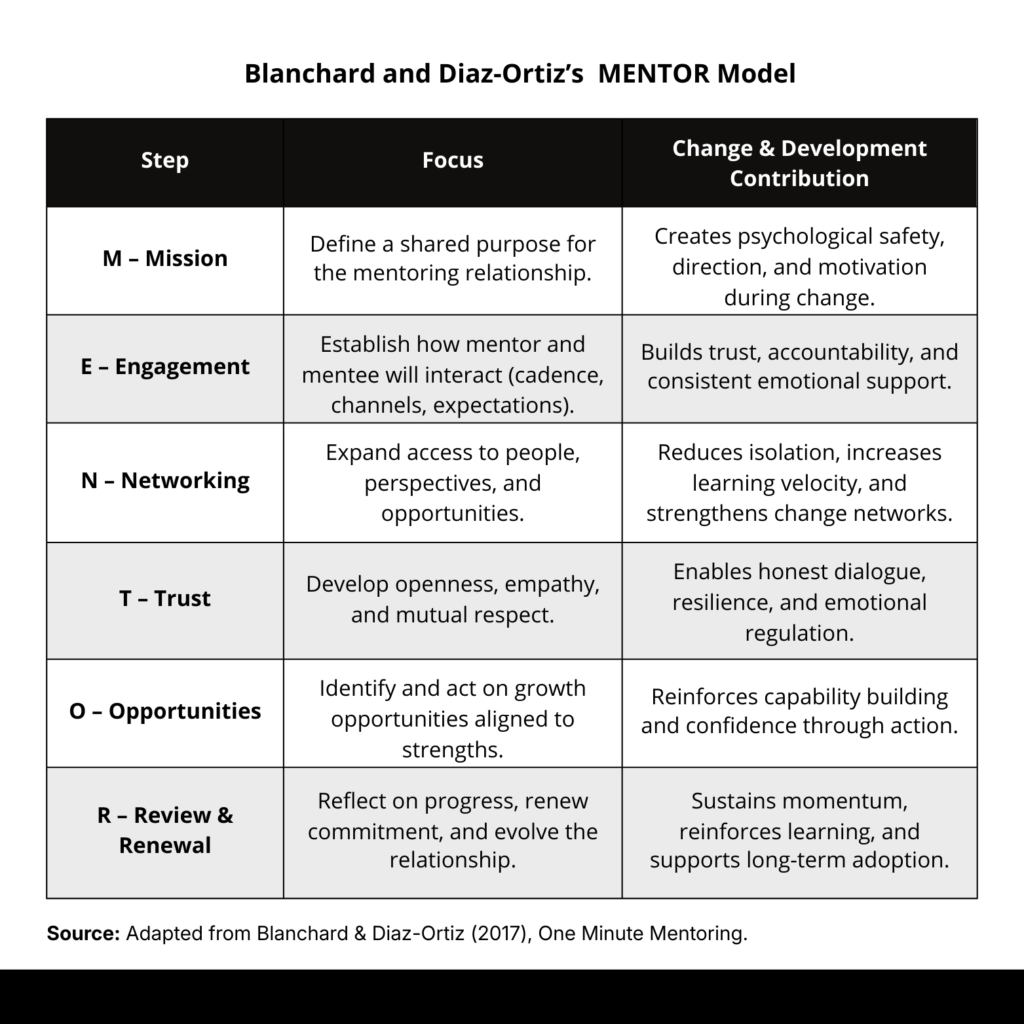
Applying the MENTOR Model enables Change Agents to structure their interactions with impacted groups in a disciplined, repeatable way. Rather than relying on ad-hoc conversations, the model provides a practical pathway to move individuals from awareness to sustained behavior change by aligning purpose, building commitment, expanding support networks, reinforcing trust, activating growth opportunities, and continuously renewing momentum. Transformation succeeds when new ways of working are consistently practiced, not just communicated.
By institutionalizing mentoring-based enablement through Change Agents, organizations embed change into daily operations, driving sustainable performance and long-term resilience. Organizations looking to build this capability formally can explore ABEP training partners delivering the CChA program.
👉 Comment below and follow our page for more insights on transformation and change enablement.
#ChangeManagement #Transformation #ChangeAgents #OrganizationalChange #LeadershipDevelopment #BusinessTransformation
Reference: Blanchard, K., & Diaz-Ortiz, C. (2017). One Minute Mentoring: How to Find and Work with a Mentor—and Why You’ll Benefit from Being One. HarperCollins.