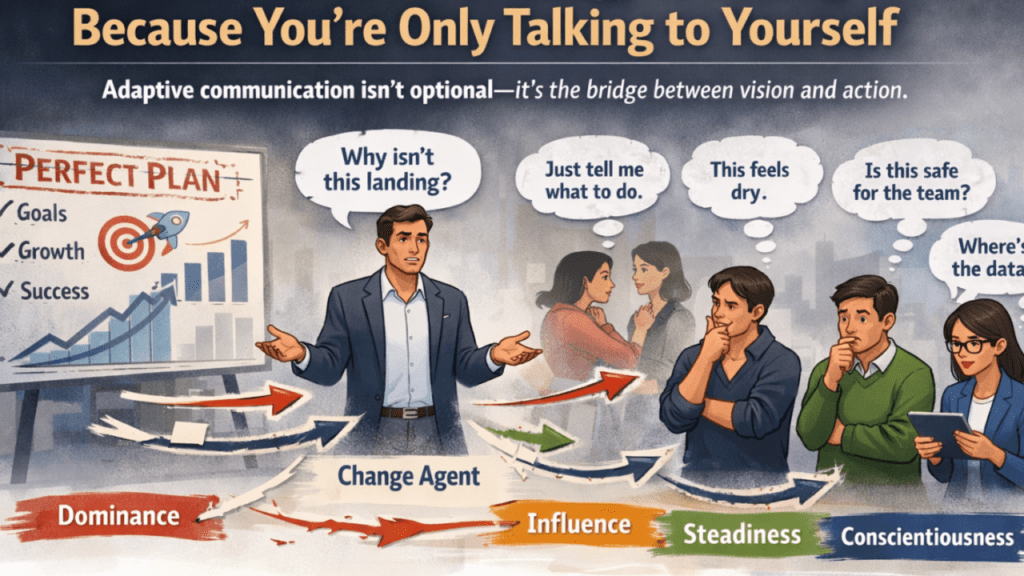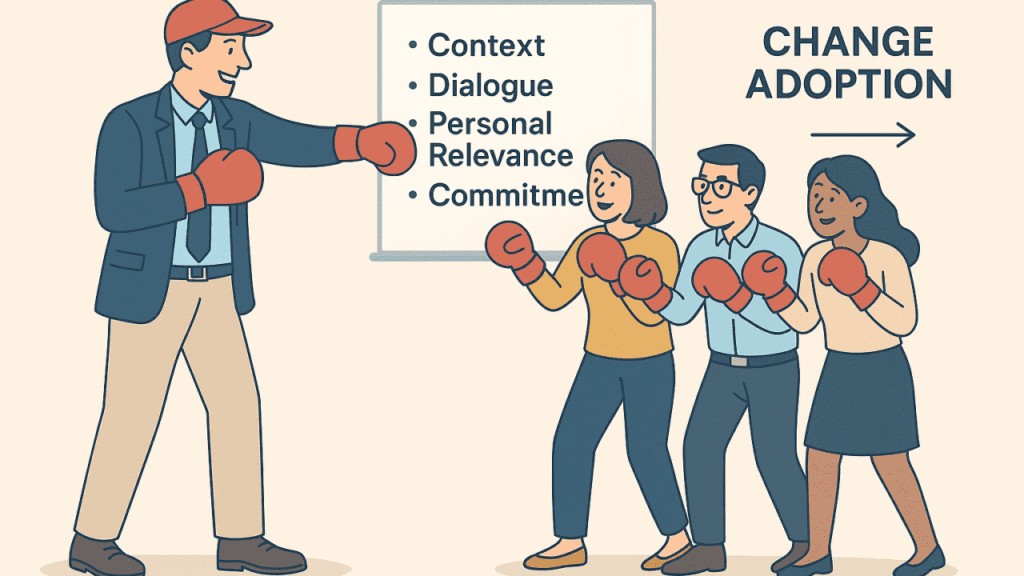

In every major change initiative, whether digital transformation, organizational restructuring, or culture shift, one reality consistently emerges: uncertainty, emotional pressure, and social complexity.
This is where many transformations fail. Not because the strategy is wrong. Not because the technology is insufficient. But because emotions are unmanaged.
Before a Change Agent can effectively lead others, they must first learn to lead themselves. In environments shaped by ambiguity and resistance, technical competence and positional authority are no longer enough. What ultimately differentiates effective change leaders is their ability to recognize, regulate, and intentionally use emotions—both their own and those of others—to guide behavior, shape relationships, and sustain momentum. In this context, a Change Agent refers to any leader, manager, or key role holder who is responsible for driving, enabling, and sustaining change across the organization.
Daniel Goleman defines this capability as Emotional Intelligence (EI). As one of core “soft skill,” EI functions as an internal leadership system that directly influences judgment, communication, trust, and decision-making. Without this foundation, even well-designed change strategies risk being undermined by reactivity, defensiveness, misalignment, and emotional contagion across teams.
Why Emotional Intelligence Matters in Transformation
Change initiatives rarely fail because of flawed processes; they fail when the human side of change is overlooked. Resistance, disengagement, and erosion of trust are seldom driven by logic, they are most often emotional responses to uncertainty, perceived loss, and fear of the unknown.
Change agents with strong emotional intelligence are able to:
- Remain grounded under pressure,
- Read the emotional climate of stakeholders,
- Respond with empathy and clarity rather than defensiveness, and
- Use emotion as a source of alignment and commitment, rather than disruption.
In this way, EI becomes the internal foundation of change leadership, enabling change agents to move from managing change to truly leading it.
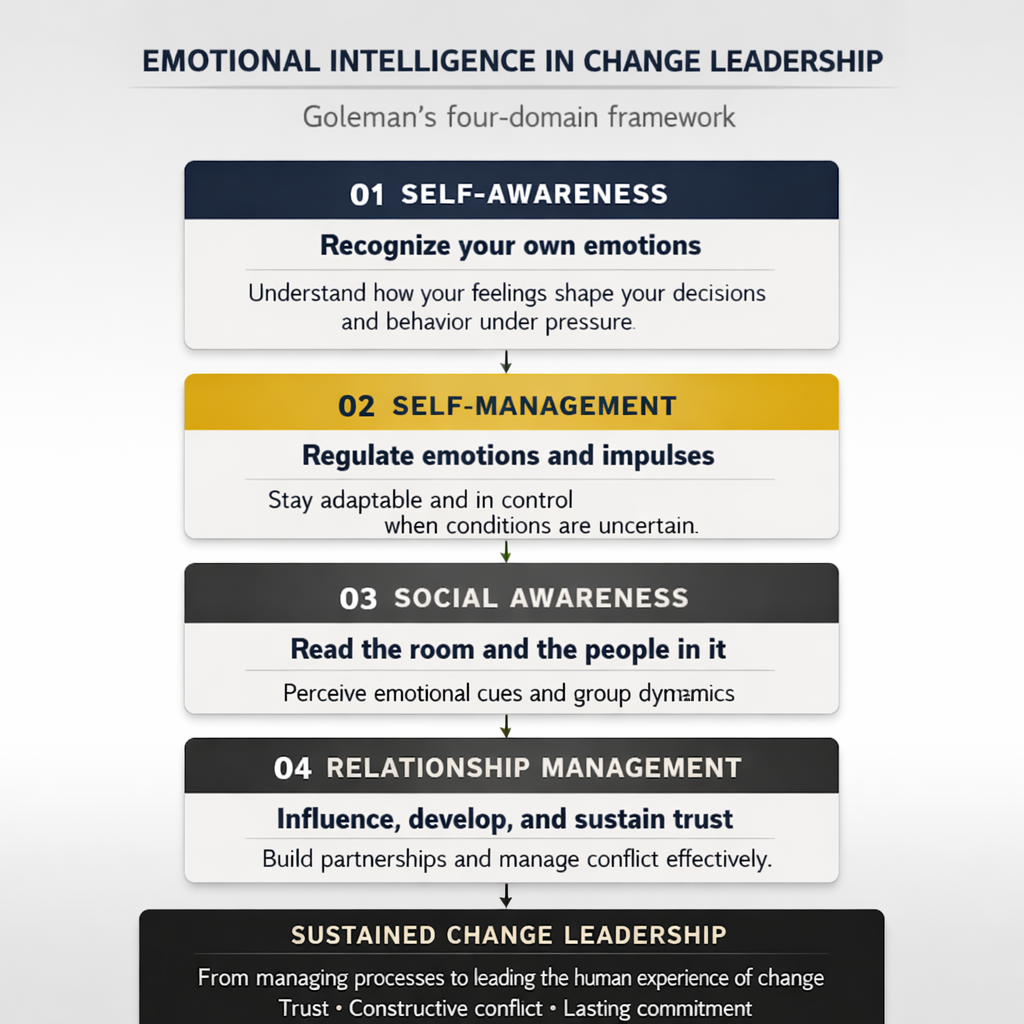
Goleman’s framework organizes emotional intelligence into four interconnected domains that reflect how leaders relate to themselves and to others.
The Four Domains of Emotional Intelligence
- Self awareness
Self-awareness is the ability to recognize and understand one’s own emotions, values, strengths, and limitations, and to understand how emotions influence behavior and decision-making.
Core competencies include: Emotional self-awareness, Accurate self-assessment, Self-confidence
- Self-Management
Self-management refers to the ability to regulate emotions, impulses, and behaviors in a productive and adaptive manner. It builds directly on self-awareness: leaders must first recognize emotions before they can manage them effectively.
Key competencies include: Emotional self-control, Trustworthiness and integrity, Conscientiousness, Adaptability, Achievement orientation and Initiative
- Social Awareness
Social awareness is the ability to understand others’ emotions, organizational dynamics, and stakeholder needs. It enables leaders to interpret emotional signals, social cues, and cultural norms.
Core competencies include: Empathy, Organizational awareness, Service orientation
- Relationship Management
Relationship management refers to the ability to influence, develop, and maintain productive relationships while managing group dynamics and facilitating collaboration.
Key competencies include: Influence, Developing others, Communication, Conflict management, Leadership, Change catalyst, Building bonds and Teamwork and collaboration
From Strategy to Behavior
Transformation does not live in strategy decks or project plans, it lives in daily conversations, emotional responses, and leadership behaviors. Emotional intelligence bridges the gap between what an organization intends to change and how people actually experience that change.
Change Agents who lead with emotional intelligence do more than manage processes; they manage the human experience of change. They create environments where trust can grow, where conflict is constructive, and where commitment is sustained. This is the kind of practitioner depth the Change Agent Practice Guide is built around.
Reflection:
What has been the hardest emotional trigger for you as a leader during change? Let’s discuss in the comments.
#ChangeBeacon #EmotionalIntelligence #ChangeLeadership #LeadershipDevelopment #SelfLeadership #ChangeManagement #OrganizationalTransformation
References:
- Goleman, D. (2006). Emotional intelligence: Why it can matter more than IQ (10th anniversary ed.). New York: Bantam Books.
- Goleman, D., Boyatzis, R., & McKee, A. (2002). Primal leadership: Realizing the power of emotional intelligence. Boston: Harvard Business School Press