Most change methodologies are designed for clarity. Real organizations are not.
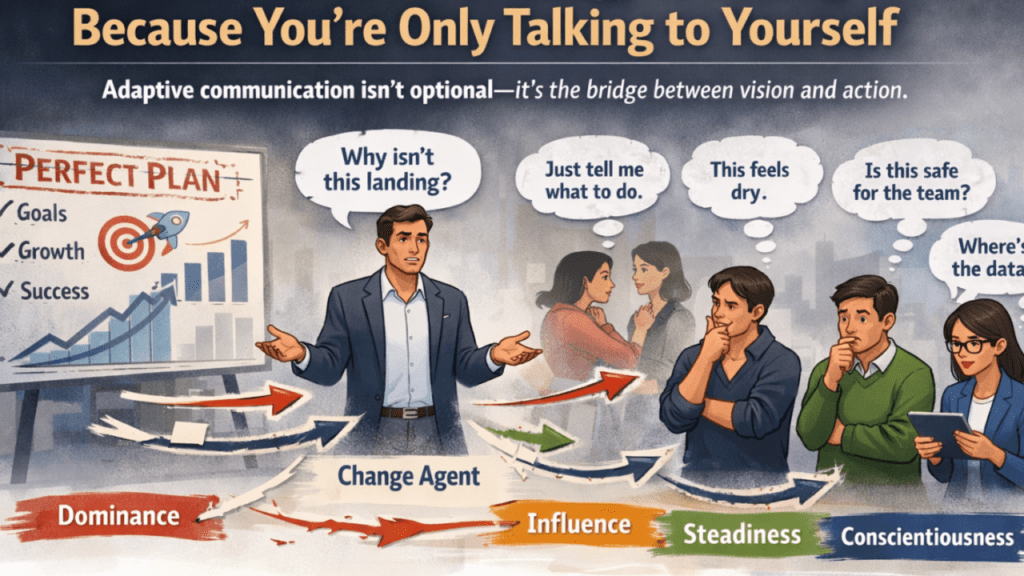
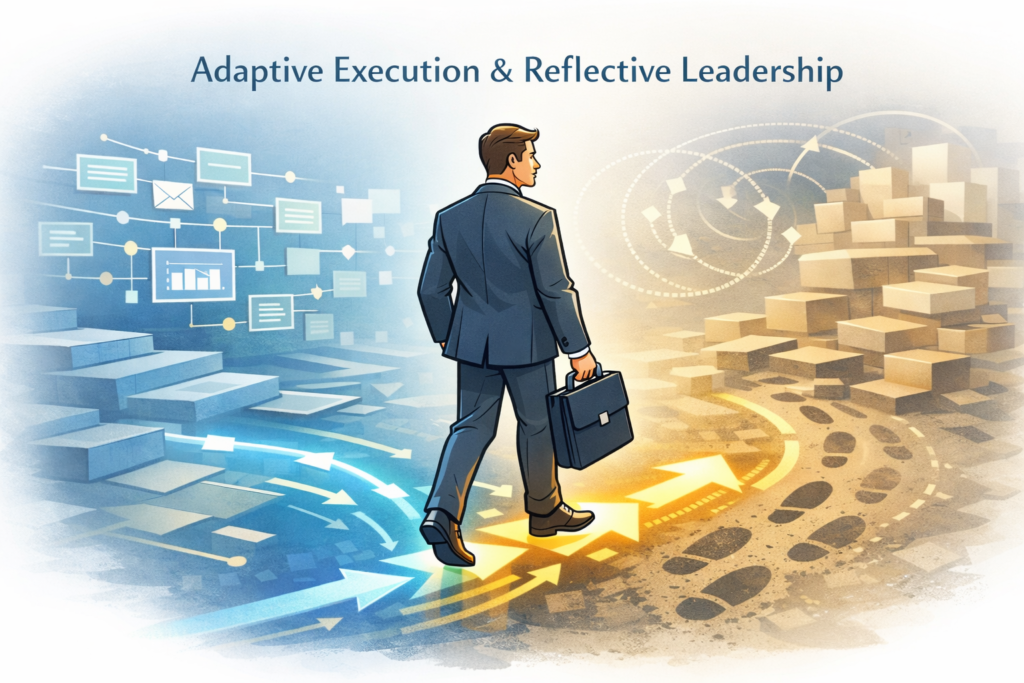
Even the most structured transformation roadmap eventually collides with ambiguity: shifting stakeholder sentiment, hidden power dynamics, informal resistance networks, and evolving priorities. At that moment, the differentiator is no longer the framework itself, but the Change Agent’s ability to think while executing.
The reflective practice framework introduced by Donald A. Schön in The Reflective Practitioner offers a disciplined approach to navigating this reality. Schön distinguishes two complementary modes of professional reflection: reflection-in-action and reflection-on-action. When translated into organizational transformation, these become operating capabilities that elevate change execution from procedural to strategic.
Reflection-in-Action: Driving Adaptive Execution
Reflection-in-action occurs during live change activities. It is the disciplined ability to observe, interpret, and adjust while execution is underway. In complex transformations, no workshop, sponsor conversation, or training rollout unfolds exactly as designed. Stakeholder sentiment shifts. Political signals emerge. Energy fluctuates. Resistance surfaces in subtle forms. A Change Agent operating purely from a static plan risks over-indexing on process and under-indexing on context. Reflection-in-action closes that gap.
In practice, this capability enables Change Agents to:
- Reframe messaging when defensive reactions appear
- Adjust facilitation style to match stakeholder energy
- Shift from advocacy to inquiry when trust declines
- Slow pacing when cognitive overload emerges
- Redirect discussions when alignment deteriorates
The core question guiding this mode is: What am I observing in this moment, and what does it require me to adjust—now?
This is not improvisation without structure. It is disciplined responsiveness anchored in strategic intent. The change objective remains stable; the path flexes in response to live system feedback.
Organizations operating in volatile environments increasingly reward this capability. Adaptive execution protects both credibility and momentum. It prevents small misalignments from compounding into systemic resistance.
Reflection-on-Action: Institutionalizing Learning
If reflection-in-action enhances execution quality in the moment, reflection-on-action strengthens long-term performance. Reflection-on-action takes place after key milestones, interventions, or rollout phases. It is a structured assessment of expected versus actual outcomes. Applied rigorously, it addresses questions such as:
- Did stakeholder readiness align with our assumptions?
- Where did engagement break down, and why?
- Were resistance drivers misdiagnosed?
- Did sequencing amplify or reduce friction?
- What signals were missed in earlier phases?
High-performing Change Agents treat every intervention as both delivery and data. They do not rely solely on formal KPIs; they analyze behavioral patterns, sponsor consistency, informal power dynamics, and adoption velocity.
Over time, disciplined reflection-on-action sharpens pattern recognition. It improves stakeholder mapping accuracy, sequencing decisions, and communication precision. Most importantly, it converts experience into transferable capability. Without structured reflection, organizations could repeat tactical mistakes across initiatives. With it, they build institutional change intelligence.
As transformations grow more complex, the limiting factor is rarely the methodology. It is the organization’s capacity to learn in motion. Change Agents who cultivate reflection-in-action enhance agility under pressure. Those who institutionalize reflection-on-action elevate the organization’s long-term change capability. This reflective capacity is exactly what Part IV of the Change Agent Practice Guide is built to develop.
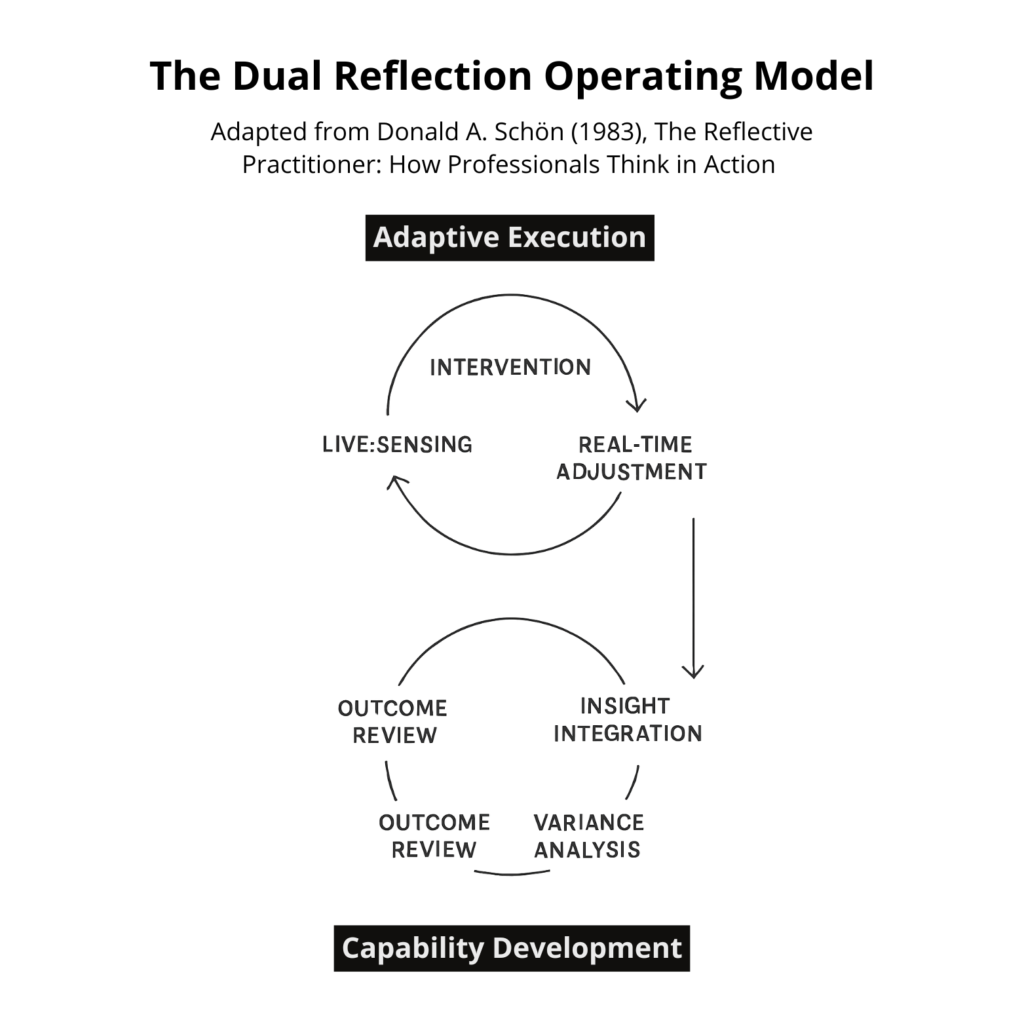
Together, these modes move change management beyond process compliance toward adaptive leadership execution. In environments defined by volatility and interdependence, reflective capacity is no longer optional. It is a competitive advantage.
👉 Comment below and follow our page for more insights on transformation and change enablement.
#ChangeBEACON #ChangeManagement #Transformation #ChangeAgents #OrganizationalChange #LeadershipDevelopment #BusinessTransformation
Reference: Schön, D. A. (1983). The Reflective Practitioner: How Professionals Think in Action. Basic Books.